Save 5% with multi-pet discount.
Breed guides
Everything you need to know about Labradoodles
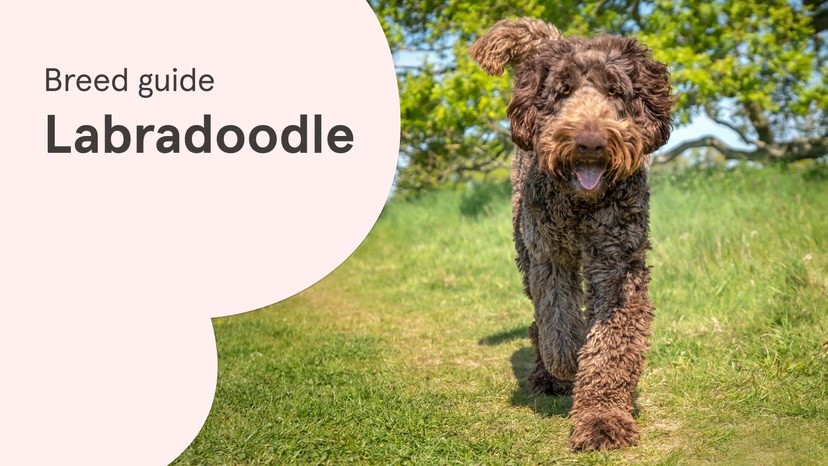
Summary
Labradoodles are like the Cavapoo's or Cockapoo's bigger cousin. Equally lovable and always ready for an adventure. This popular crossbreed is part Labrador Retriever and Poodle. Being a crossbreed, their size and temperament can vary, but they're generally smart, loving, and very energetic dogs.
Key stats
Height: Variable
Weight: Variable
Size: Medium to large
Lifespan: 10 to 12 years
Coat: Medium, silky
Exercise: 1 to 2 hours daily
Grooming: Daily or weekly
Temper: Gentle, loving, loyal
Breed history
The Labradoodle is a popular crossbreed, sometimes known as a "designer dog" breed. The beloved Labradoodle is a cross between a Labrador Retriever and a Poodle, creating a pup that's clever and charming. Their Poodle half brings the brains, while the friendly Labrador adds heaps of warmth and affection.
The Labradoodle's history starts in the 1980's. Wally Conron, a breeding manager for the Royal Guide Dogs Association of Australia, opened a letter from a blind woman in Hawaii. She needed a dog that could be trained to be a guide dog, but wouldn't trigger her husband's allergies like other long-haired dogs. Wally, who was determined to help, knew Poodles were great for people with allergies and tried training 33 different Poodles. But, none of them had the right temperament to be a guide dog.
That's when he came up with the idea for a new crossbreed. A dog with the working ability of a Labrador, and the low-shed coat of a Poodle. And the Labradoodle was born. A pup was sent to Hawaii and became the world's first Labradoodle guide dog.
Labradoodles over time have become more and more popular over the years as people fell in love with their coats and cheeky personalities.
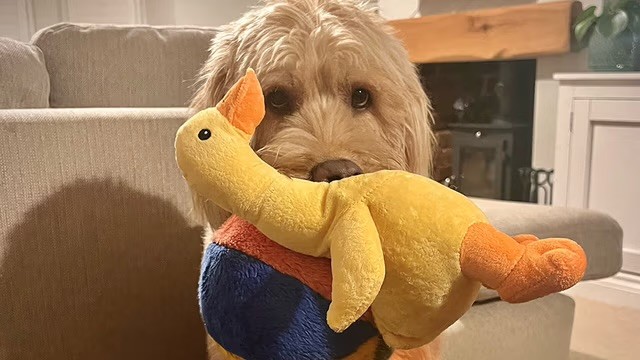
Meet Rufus the Labradoodle!
He belongs to Alex, our design manager. Alex says the best things about Rufus are:
His character - he's very affectionate, cheeky, and a liiittle bit neurotic
He's a giant lap dog and doesn't realise how big he is!
He prances like a show pony when he's happy
The constantly surprising number of toys he can hold in his mouth (3 in this pic!)
When he has shaggy hair he looks like a teddy bear
How excited he gets when I've been away and practically bowls me over
Appearance
Labradoodles are a crossbreed, so they come in lots of different looks. You could have a slim dog with a curly coat that looks almost identical to a Poodle. Or your Labradoodle might have loose curls or waves and look like a Cockapoo. Or, they could look just like a Labrador but with a straight coat, but some whiskers and longer, scruffier fur! They have big, kind eyes, and ears that can either flop or hang down.
They also come in many different sizes, from standard to mini, depending on what type of Poodle parent they have. Labradoodles can be medium-sized or large if they have Standard Poodle in their family history. They may be medium or maybe even small if they have more Miniature or Toy Poodle in their ancestry.
Labradoodle colours
As there is no breed standard, Labradoodles can be any colour their parent breeds are. While Labs only have three colours, Poodles have many! Labradoodle colours are:
White
Cream
Chocolate
Black
Red
Apricot
Caramel
Silver
White and black
White and brown
Brown and black
Labradoodles can also be parti-coloured, where their fur is a combination of different colours.
Labradoodle temperament
A Labradoodles temperament is active, affectionate, and intelligent. These friendly dogs become really close friends with their owners and often get along with other pets, even cats. Both Labs and Poodles are working breeds so they're very active, smart, and love having company. They can struggle with being alone, so training them to be independent is important.
Just like a Labrador, they have lots of energy, love to play, and can act like puppies even when they're older. As Labradors are working dogs, their crossbreeds inherit similar temperaments and are loyal, smart, and love making their owners happy.
Poodles are one of the most intelligent dog breeds on the plant. So their crossbreed, like Cockapoos and Labradoodles, are also typically smart. So they can pick up training quickly. But they'll need plenty of mental stimulation or they'll get bored, which is when they can get up to mischief.
If you have the time and energy to train them and spend time with them, they can be a good choice for first-time dog owners.

How much exercise does a Labradoodle need?
Adult Labradoodles need one to two hours of exercise and playtime every day. They're a crossbreed of two working breeds, so they're very active and energetic.
Both Labs and Poodles were bred to fetch prey from water too, so Labradoodles are usually good swimmers and love water which can be a great low-impact activity for older dogs.
Because of their working parent breeds, they have strong instincts to find and bring things back. Hiding treats they can find can be a great way to encourage their retrieval instincts. Labradoodles are usually very motivated by food too. So they love things like puzzle feeders or learning new tricks with treats as a reward. Just make sure you feed them a balanced diet in the right portions, and keep treats as treats, to help prevent obesity.
How to groom a Labradoodle
A grooming routine for a Labradoodle depends on the kind of coat they have and how long it is. Labradoodles have three kinds of coats. There's a hair coat which can shed, a denser coat with long curls that usually doesn't shed, and one that's softer and more fluffy.
Try to brush your pup every week to stop their curls from getting matted and causing discomfort. A trip to the groomer every six to eight weeks for a full groom and clip can keep your pup looking and feeling soft.
Their coats have some natural resistance to weather and dirt, so you'll need to wash your Labradoodle less often than you think. Only wash your dog if they look or smell particularly dirty, which might be every 1 to 3 months. However, Labradoodles can be prone to ear infections thanks to their long, hairy ears. So make sure you check them every week or so. If their ears are smelly, you might want to check with the vet to see how to clean them.
Like any dog breed, you should check their claws once a month. If you hear them clacking on the floor, it might be time to clip them to stop them from splitting or overgrowing. Clean their teeth regularly to prevent dental disease.
Common Labradoodle health problems
Common Labradoodle health problems include any problems that Labrador Retrievers and Standard Poodles can inherit. These include eye issues, hip dysplasia, and knee problems. If you're thinking of getting a Labradoodle, it's important to know their potential health concerns, know what to look for and take action to correct issues. Regular vet check-ups will help with managing these health conditions.
Hip dysplasia
Hip dysplasia is a common issue in large and giant-breed dogs including Labradors and Poodles. It's caused by a pup's hips growing abnormally. You may notice your pup is uncomfortable, not as active, or struggling with things like getting up or down stairs or even lying down. There are lots of ways to treat hip dysplasia, from nutritional supplements, and anti-inflammatory medications, to surgery. Your vet is best to decide what treatment is needed. Also, before getting a Labradoodle, make sure the breeder has screened the parent dogs' hip scores.
Eye conditions
Labradoodles are prone to developing or inheriting a few different eye problems. The parent dogs should be screened for hereditary eye disease before breeding. Call your vet right away if you ever think your dog has eye problems.
Multifocal retinal dysplasia (MRD): This study suggests multifocal retinal dysplasia (MRD) is common in the UK Labradoodle population. MRD are small folds in the tissue at the back of their eyes. There are no obvious signs, and usually, a dog's vision isn't affected. But some dogs can have visual problems and in rare cases, blindness.
Progressive retinal atrophy: This is a genetic eye condition which eventually leads to blindness.
Cataracts: Early cataracts can have few symptoms, but the disease can get worse over time.
Glaucoma: This can be inherited this or caused by something like an eye injury. Symptoms include eye pressure, excessive blinking, a cloudy eye, and receding eyeballs.
Ear infections
Probably the most common Labradoodle health problem is ear infections. These can be because of allergies, infections, or things getting stuck in their ears. When their ear canal gets irritated, it can lead to "otitis", which is inflammation of the ear canal. It makes their ears super itchy. Treatment for ear problems depends on the underlying cause. It can range from using topical drops, to managing allergies and infections over a long period. In some cases, ongoing treatment might be required throughout a dog's life.
ACL tears
Labradoodles can have a knee problem called an anterior cruciate ligament (ACL) tear. This is when ligaments in the knee are damaged and make knee unstable. This can happen after a sudden injury, like landing awkwardly while running and jumping. Or it can happen slowly over time, especially if the dog is carrying extra weight. Things like age, being overweight, and genetics can increase a Labradoodle's chances of having an ACL tear. Your vet can suggest the best treatment, but this often needs surgery to fix.
*Average time to settle all claims between May and November 2025
Napo Limited is registered in England and Wales (company number: 13281620). Our address is 2 Jubilee Place, London, SW3 3TQ. Napo is a trading name of Napo Limited who, for the purposes of insurance, is authorised and regulated by the Financial Conduct Authority (ref: 994239). Our entry on the Financial Services Register can be checked for details of our permissions. We are also registered with the Information Commissioners Office in relation to the processing of personal information (reg. no: ZB073689). Defaqto 5 Star Rating applies to Napo £4,000 pet insurance.
What we cover is subject to terms and conditions in our policy.
4.5 Excellent