Save 5% with multi-pet discount.
Breed guides
Everything you need to know about Irish Wolfhounds
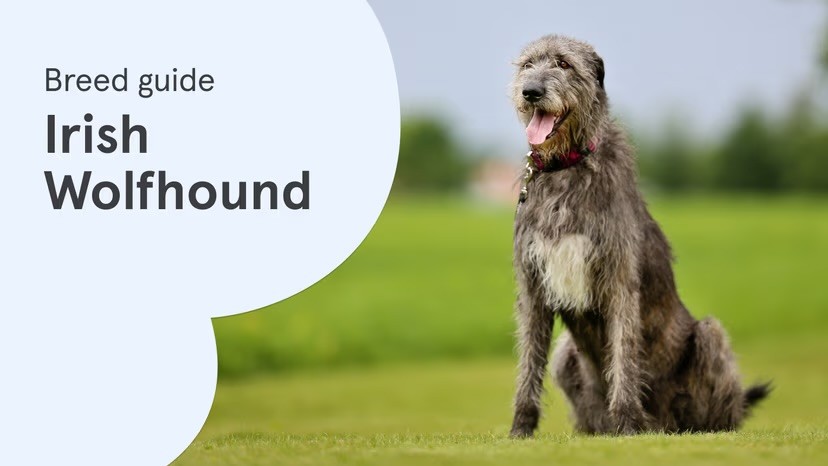
Summary
The Irish Wolfhound was once a formidable hunter, but now they're more at home on your sofa. They're big dogs with big hearts. (And you'll need a similarly large home for them!)
Key Stats
Height: 71 to 86cm
Weight: 40 to 54.5kg
Size: Giant
Lifespan: 6 to 8 years
Coat: Long, wiry
Exercise: 2 hours daily
Grooming: Weekly
Temper: Calm, dignified, laid back
Breed history
In ancient times right through to the Medieval period, there are references and stories of "wolfhounds" of Ireland. These huge dogs had a gentle disposition, but incredible size and strength that meant they were able to hunt wolves and fight lions or bears. They would also guard livestock from wolves. However, the breed dwindled after wolves became extinct, and more so after the great famine. Info varies on whether these Wolfhounds died out entirely, or at least very rare.
Then in the 19th century, a man called Captain George Augustus Graham wanted to revive these ancient dogs. He had a dog called "Faust" who was allegedly descended from these dogs. He crossbred Faust with other breeds, like the Scottish Deerhound and Mastiff, to recreate the Irish Wolfhound.
Although this breed was created to be like the ancient war dogs and guardians of old, they're most famous for their huge size and sweet nature. They're the definition of a "gentle giant", and the tallest dog breed on the planet.
Appearance
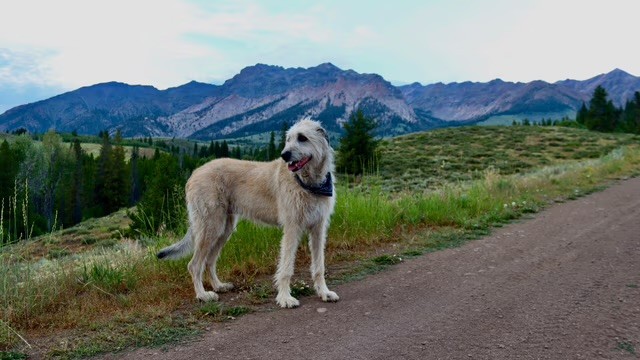
Wolfhounds look like a supersized Deerhound, or a huge Greyhound with a wiry coat. They're longer than they are tall (and these guys are tall!) with long legs and neck. They're covered in a thick, wiry coat. With a beard and eyebrows, that make them look super expressive. Although they're often grey, they actually come in a variety of colours.
Irish Wolfhound colours
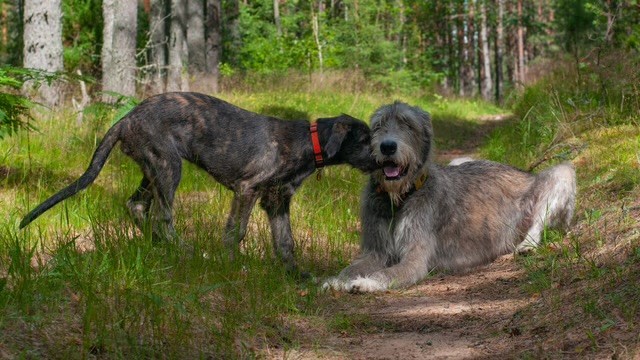
You might be surprised to find there are many Irish Wolfhound colours! It can be easy to assume they're just grey, but they come in many shades from Cream to Black, and with or without Brindle. Brindle is the coat pattern some dogs have, and looks like tiger stripes.
The Irish Wolfhound colours according to the breed standard are:
Black
Black brindle
Brindle
Dark brindle
Grey
Grey brindle
Red
Red brindle
Wheaten
Wheaten brindle
Cream
Fawn
Irish Wolfhound temperament
Irish Wolfhounds are gentle giants. They've got a sweet and friendly nature. Wolfhounds are also very affectionate, which can be a problem when these huge pups want to snuggle on your lap! But they're usually more reserved around strangers.
These pups are known for being calm and easygoing. If anything, they can seem lazy as they loaf about the house or snooze on the sofa.
Although they're generally good with children, their huge size means they should be supervised around kids and animals, and might not be suitable for young families. They can be great alongside other dogs and cats if socialised from a young age, but they still have a high prey drive so might not be great around small furries.
How much exercise does an Irish Wolfhound need?
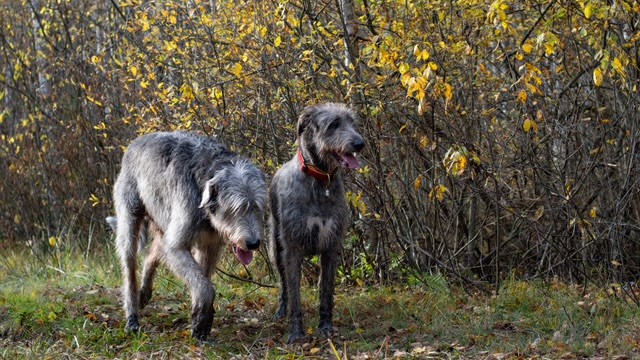
Despite their massive size, Irish Wolfhounds don't need an absurd amount of exercise. They should have 1-2 hours of exercise a day. Although their size means playtime might be limited to when you're outside and have the space for zoomies. (Otherwise, you might find some of your furniture knocked over!)
But when your Irish Wolfhound is a puppy, you'll need to take extra care with their exercise. Because they grow very quickly, you need to keep exercise gentle and limited, to protect they're growing bones and joints.
How to groom an Irish Wolfhound
Irish Wolfhounds have a double coat, with a thick wiry topcoat and a soft fur undercoat. Their harsh topcoat keeps them surprisingly clean, protecting them from water, dirt, and harsh weather. It shouldn't be shaved otherwise it'll lose it's texture and protective properties.
Brushing them once or twice a week will help get rid of any dirt in their fur, or dead hair. Although they shed all year round, it's not excessive, and regular brushing can keep on top of it. They might shed more as they change between their summer and winter coats, but brushing them more regularly should stop it from being an issue.
As for bathing, they should only need a bath when they're smelly or visibly dirty. Like if they've rolled in something. You'll need to trim their claws once a month and clean their teeth regularly to help prevent dental disease.
Common Irish Wolfhound health problems
Like many breeds, Irish Wolfhounds are prone to a few health problems. In part because of their unusual size.
Heart disease
Irish Wolfhounds are prone to a type of heart disease called dilated cardiomyopathy (DCM). This makes the muscle in one area of the heart thin and weak, which stops it from pumping as well as it should. If untreated, it can lead to congestive heart failure. All breeding dogs should have their hearts tested before breeding, so puppies have the best chance of being healthy.
Liver shunt
Liver shunt or "portosystemic shunt" (PSS), is when blood from certain organs doesn't go into the liver as normal. That means the blood isn't filtered or detoxified, which can cause a buildup of toxins in the bloodstream. It's usually present from birth, so puppies should be screened before going to their new homes.
Bone cancer
A kind of bone cancer called Osteosarcoma is a common health problem in Irish Wolfhounds and is sadly one of the most common causes of death. One of the common symptoms is lameness or limping, so it's always best to take your Wolfie to the vet if you notice this.
Sight loss
Irish Wolfhounds can develop a condition called "progressive retinal atrophy". It's a degenerative eye disorder, caused by gradual loss of photoreceptors at the back of the eye. This causes the affected dog to slowly lose their sight.
Hip dysplasia
Hip dysplasia is common in many large breeds, including Wolfhounds. It causes significant pain for puppies as their hip joints grow in an abnormal manner. Some dogs with a mild form of the condition won't show signs until they are older and develop arthritis in their hips. Breeders should screen dogs for this before breeding.
Elbow dysplasia
Like hip dysplasia, elbow dysplasia causes the elbow joint to grow abnormally. It's believed to happen because the three bones that make the dog's elbow grow at different rates, resulting in a loose joint. This can lead to painful lameness.
*Average time to settle all claims between May and November 2025
Napo Limited is registered in England and Wales (company number: 13281620). Our address is 2 Jubilee Place, London, SW3 3TQ. Napo is a trading name of Napo Limited who, for the purposes of insurance, is authorised and regulated by the Financial Conduct Authority (ref: 994239). Our entry on the Financial Services Register can be checked for details of our permissions. We are also registered with the Information Commissioners Office in relation to the processing of personal information (reg. no: ZB073689). Defaqto 5 Star Rating applies to Napo £4,000 pet insurance.
What we cover is subject to terms and conditions in our policy.
4.5 Excellent