Save 5% with multi-pet discount.
Breed guides
Everything you need to know about German Shepherds
Summary
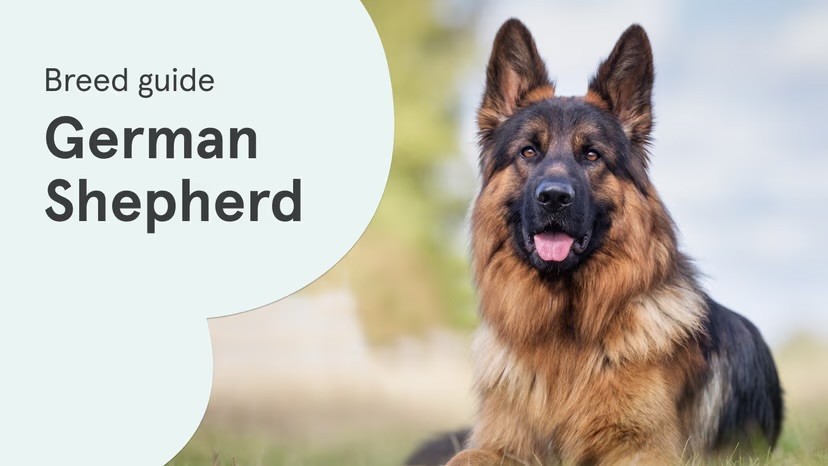
Smart, strong, and super loyal. The German Shepherd is well known for its work in the army and the police, but they also make amazing pets for active people!
Key stats
Height: 55 to 65cm
Weight: 22 to 40kg
Size: Large
Lifespan: 9 to 12 years
Coat: Medium or long, straight
Exercise: 1 to 2 hours daily
Grooming: Weekly
Temper: Strong willed, brave, smart
Breed history
The German Shepherd has a surprisingly short breed history, having emerged in 1899. The breed owes its existence to a guy called Max von Stephanitz. Von Stephanitz was a German cavalry officer but had been a student of the Berlin Veterinary College and a member of a short-lived society that tried to standardise dog breeds in Germany. He was also convinced dogs should be bred for their working ability.
He fell in love with a shepherd dog named Hektor at a dog show in 1899. Hektor had all the traits von Stephanitz was looking for. Strength, smarts, and an eagerness to work. It helped the dog was pretty good looking too!
He bought the pooch and renamed him Horand von Grafrath. He then founded the "Society for German Shepherd Dogs" and declared Horand as the first-ever German Shepherd. And thus, the breed was born.
Like a lot of working dogs, the breed eventually split into two types, a working line and a show line which have a few physical and personality differences.
Today, German Shepherds are one of the most popular dog breeds in the world. They're not just working dogs though, they've been film stars, and now a popular family pet.
Appearance
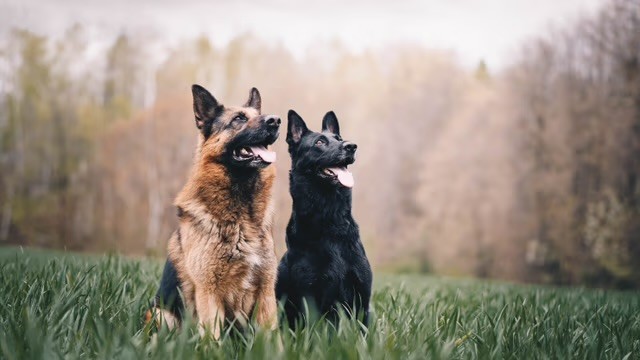
German Shepherds are large dogs with a "wolf-like" appearance, thanks to their upright ears and stance. They can have medium or long fur, which is always straight and shouldn't be overly fluffy. The fur on their neck is often slightly longer, giving them a subtle "mane", and their tail is often slightly plumed. Sometimes, a German Shepherd's back can slope downwards towards the tail, but this shouldn't be extreme. They're always some combination of black, tan, grey or sable.
German Shepherd colours
German Shepherds come in a relatively small number of colours. They will always be either black, grey, tan, or sable, or some combination of those colours. There can be cream German Shepherds, which are a light gold colour, but the colour is not considered a breed standard. Most German Shepherds are a shade of brown, like tan, with black markings. These markings are often a dark mask on the face, and either a "saddle" or "blanket" shape on their back.
The German Shepherd colours according to the Kennel Club breed standard are:
Black
Black and gold
Black and tan
Dark sable
Gold sable
Grey
Grey sable
Sable
Temperament
A German Shepherds temperament is energetic, brave, intelligent, and loyal. These pups are known for their versatility, since they're just as happy as an active family pet as they are working hardcore jobs.
The German Shepherd's smarts are off the charts! They're the 3rd smartest dog breed in the world, right behind Poodles and Border Collies. Their quick brains are what make them such incredible working dogs, and this means they can pick up cues and training pretty quickly.
As they are a herding breed originally, these dogs are protective and loyal. These transferable skills that meant they're right at home as guard dogs, search and rescue dogs, and police or military dogs. It means they bond closely with their humans, but are aloof around strangers and stranger dogs. It also gives them a tendancy to be hyper-aware of their surroundings, which can lead to nervousness. Training and socialisation is essential then, and they tend to be better suited for experienced owners.
That means that it's important to remember that German Shepherds thrive on activity and tasks. A bored German Shepherd can be mischievous, and will find things to occupy them if you don't give them enough to do! So lots of mental and physical activity are a must, but you'll earn a very loyal furry friend for it.
How much exercise does a German Shepherd need?
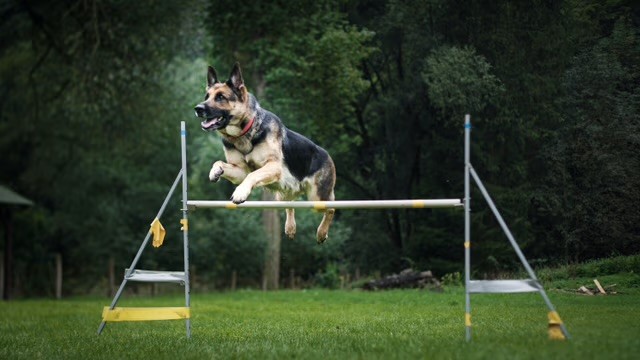
Being an active working dog, a German Shepherd needs a lot of exercise every day. It's advised they have at least 2 hours of exercise per day. But remember, that doesn't just have to be walks, other exercises like swimming or doggy sports count too. Plus, training and mental stimulation can also supplement some physical activity. So it can be a good idea to aim for exercise that's both physically and mentally stimulating.
How to groom a German Shepherd
Since German Shepherds have a thick double coat, they are pretty weather-resistant, and dirt resistant! You won't need to clip their fur, just give it a weekly brush to help get rid of any dead fur or dirt. You should also bathe your pup every 3 months at least, to help keep their skin and fur clean and healthy. Otherwise, you should clean their teeth regularly to help prevent dental disease, and clip their claws once a month.
Common German Shepherd health problems
Joint problems
One of the most common German Shepherd health problems is hip dysplasia or elbow dysplasia. It's a common problem large breeds, including German Shepherds. Sadly, this breed is one of the most likely to develop joint problems, and the risk increases with age. This is where the joints don't develop properly, and can lead to arthritis. If you want to get a German Shepherd, make sure the breeder has screened the parent dogs for elbow and hip scores.
Spinal problems
German Shepherds can develop a condition called Canine Degenerative Myelopathy (DM) or Chronic Degenerative Radiculomyopathy (CDRM). It causes weakness or paralysis in the back legs. Again, breeders should screen their dogs before breeding.
Eye problems
Eye problems are another common German Shepherd health problem. They can be prone to cataracts, which can cause vision loss. They can also develop multifocal retinal dysplasia, which is where the layers of the retina in their eye don't develop properly.
Anal furunculosis
This is a painful condition that causes inflammation and ulcers around the dog's anus. German Shepherds are the breed most prone to the condition, particularly in middle age or older.
Epilepsy
German Shepherds can be prone to epilepsy, which causes seizures.
Bleeding disorders
German Shepherds can be prone to different types of haemophilia. These conditions mean that if an affected dog is injured, the wounds don't scab or clot properly and they bleed more than normal. Dogs can be screened for these condition.
Pituitary dwarfism
It is rare, but German Shepherds are more prone to this hormonal deficiency than other breeds. It impacts their growth and sadly reduces their lifespan.
*Average time to settle all claims between May and November 2025
Napo Limited is registered in England and Wales (company number: 13281620). Our address is 2 Jubilee Place, London, SW3 3TQ. Napo is a trading name of Napo Limited who, for the purposes of insurance, is authorised and regulated by the Financial Conduct Authority (ref: 994239). Our entry on the Financial Services Register can be checked for details of our permissions. We are also registered with the Information Commissioners Office in relation to the processing of personal information (reg. no: ZB073689). Defaqto 5 Star Rating applies to Napo £4,000 pet insurance.
What we cover is subject to terms and conditions in our policy.
4.5 Excellent