Save 5% with multi-pet discount.
Breed guides
Pet insurance
Everything you need to know about Bloodhounds
Summary
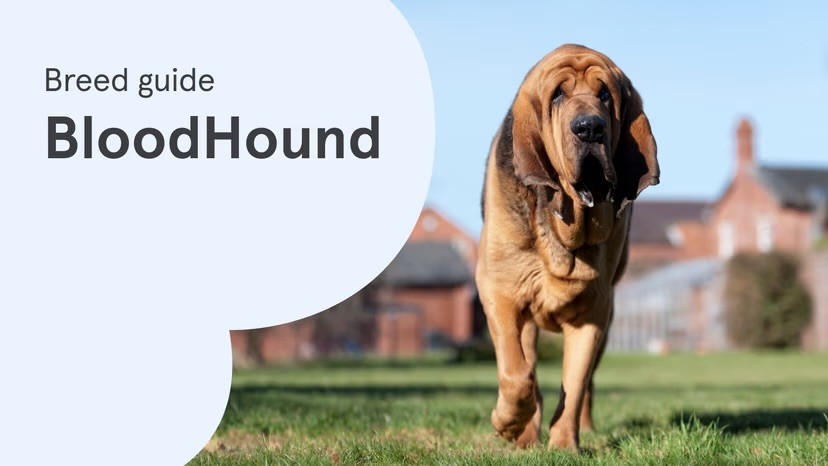
The Bloodhound is a historical British breed that has sadly become endangered. These docile and droopy dogs make great detectives, thanks to their incredible noses.
Key stats
Height: 58 to 71cm
Weight: 40 to 54kg
Size: Large
Lifespan: 8 to 12 years
Coat: Short, straight
Exercise: 2 hours daily
Grooming: Weekly
Temper: Gentle, docile, independant
Breed history
The Bloodhound is a native British dog breed that been used as a hunting and tracking dog since the Middle Ages. They were kept on leads and used to detect and track deer and boar, but they've also been used to track humans since Roman times.
You might think the name comes from their super sniffing ability, and the ability to follow trails of blood. However, the breed's name supposedly comes from the fact breeders were so diligent in keeping records of their dog's bloodlines.
Although many of us have heard about Bloodhounds, you've probably never seen one. They've been an endangered breed for over a decade. In 2025, only 4 were registered with the Kennel Club.

Appearance
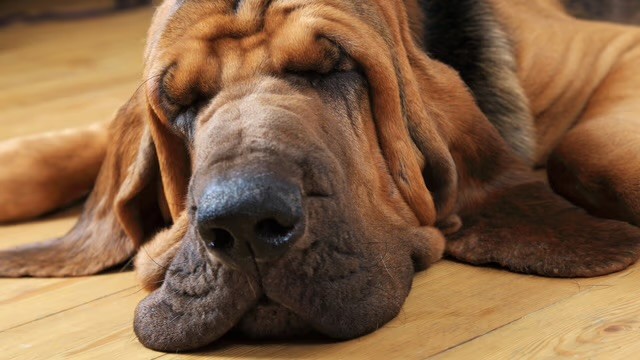
Bloodhounds are unmistakable dogs thanks to their droopy faces, huge floppy ears, and masses of wrinkles. Their long ears and folds of skin were a desirable trait, believed to make air flow from the ground to their nose, helping them to catch scents.
Bloodhound colours
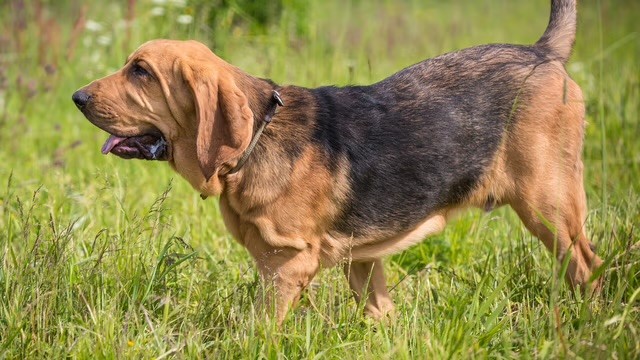
Bloodhounds come in a restricted range of colours, but they can have a wide variety of markings including dark "saddles" or "blankets".
The official Bloodhound colours as recognised by the breed standard are:
Black & tan
Liver & tan
Liver
Red
Bloodhound temperament
The typical Bloodhound temperament is docile, gentle, and even-tempered. They're friendly dogs and very affectionate with their human family members. When they're not working, they love to chill out and have a cuddle. But when there's a smell to follow, they soon perk up!
Although they are working dogs, don't expect a super-obedient pooch. Be prepared to work on their recall and lead walking if you bring a Bloodhound home. These dogs are tireless when they're following a scent, so they can seem willful and stubborn if their nose is to the ground.
Did you know?
Did you know: Bloodhounds have 250-300 million scent receptors. That's more than double the number the average dog has! Their super-powered nose can follow scents over 100 miles, and detect smells that are more than 300 hours old. Their nose is so good, they're the only animal whose evidence is admissible in court!
How much exercise does a Bloodhound need?
Bloodhounds need a lot of exercise. You should aim to provide 1.5 to 2 hours of exercise every day. As well as several walks, this can include scent games, training, and other forms of stimulation.
Despite how docile they are at home, Bloodhounds are an active breed. They were bred to follow scents for miles, so they have a lot of stamina. Your Bloodhound will need opportunities to use up their energy, and to use that super nose for stimulation.
How to groom a Bloodhound
Because they have a thick coat of short, straight fur a Bloodhound doesn't need a lot of grooming. You won't need to trim or shave your Bloodhound's fur, and you only need to bathe them whenever they get smelly or visibly dirty.
You should brush your Bloodhound at least once a week to get rid of any dirt and dead hair in their coat. Bloodhounds shed continually throughout the year, and regular brushing will mean the dead fur comes out on the brush and not on your furniture.
However, Bloodhounds have sensitive skin and all those wrinkles make them vulnerable to itching and infection. Your vet can advise you on the best shampoo for your dog, and how often you should bathe them. They might also advise you on how to clean their ears to help prevent infection.
Just like any dog breed, you will need to brush your Bloodhound's teeth regularly to prevent dental disease. You will also need to trim their claws at least once a month.
Common Bloodhound health problems
Hip dysplasia
Hip dysplasia is common in many large breeds of dog, including the Bloodhound. Most dogs inherit this condition, so a good breeder will screen their dogs for dysplasia before breeding them.
Hip dysplasia can be managed with medication, exercise, and weight management. However, some dogs do require surgery to treat their condition.
Elbow dysplasia
Big dogs, like Bloodhounds, are prone to elbow dysplasia too. It's where the elbow joint in their front legs doesn't develop correctly.
Just like hip dysplasia, this can be managed with weight management, medication, exercise, or surgery.
Similarly, good breeders must screen their dogs for this condition before breeding them.
Sensitive skin
Because of their wrinkles and folds of skin, Bloodhounds are prone to skin fold dermatitis. This is an infection in the folds of skin. Your vet can advise you on how to clean these wrinkles and rolls to help prevent infection. They can also suffer from allergies (atopic dermatitis) which causes inflammation and itchy skin.
Eye problems
Because of their sunken eyes and wrinkly faces, Bloodhounds are prone to several eye problems. Their wrinkles make them vulnerable to ectropion and entropion, where their eyelids roll the wrong way and irritate their eyes. Dry eye is another common condition affecting Bloodhounds.
Ear infections
A Bloodhound's long, floppy ears are prone to infection as there is little airflow inside the ear. Make ear checks a regular part of your Bloodhounds grooming regime, and your vet can tell you how to clean their ears to help prevent infection.
With lifetime dog insurance from Napo, you'll have the peace of mind that your Bloodhound is protected and can always get the care they need.
*Average time to settle all claims between May and November 2025
Napo Limited is registered in England and Wales (company number: 13281620). Our address is 2 Jubilee Place, London, SW3 3TQ. Napo is a trading name of Napo Limited who, for the purposes of insurance, is authorised and regulated by the Financial Conduct Authority (ref: 994239). Our entry on the Financial Services Register can be checked for details of our permissions. We are also registered with the Information Commissioners Office in relation to the processing of personal information (reg. no: ZB073689). Defaqto 5 Star Rating applies to Napo £4,000 pet insurance.
What we cover is subject to terms and conditions in our policy.
4.5 Excellent